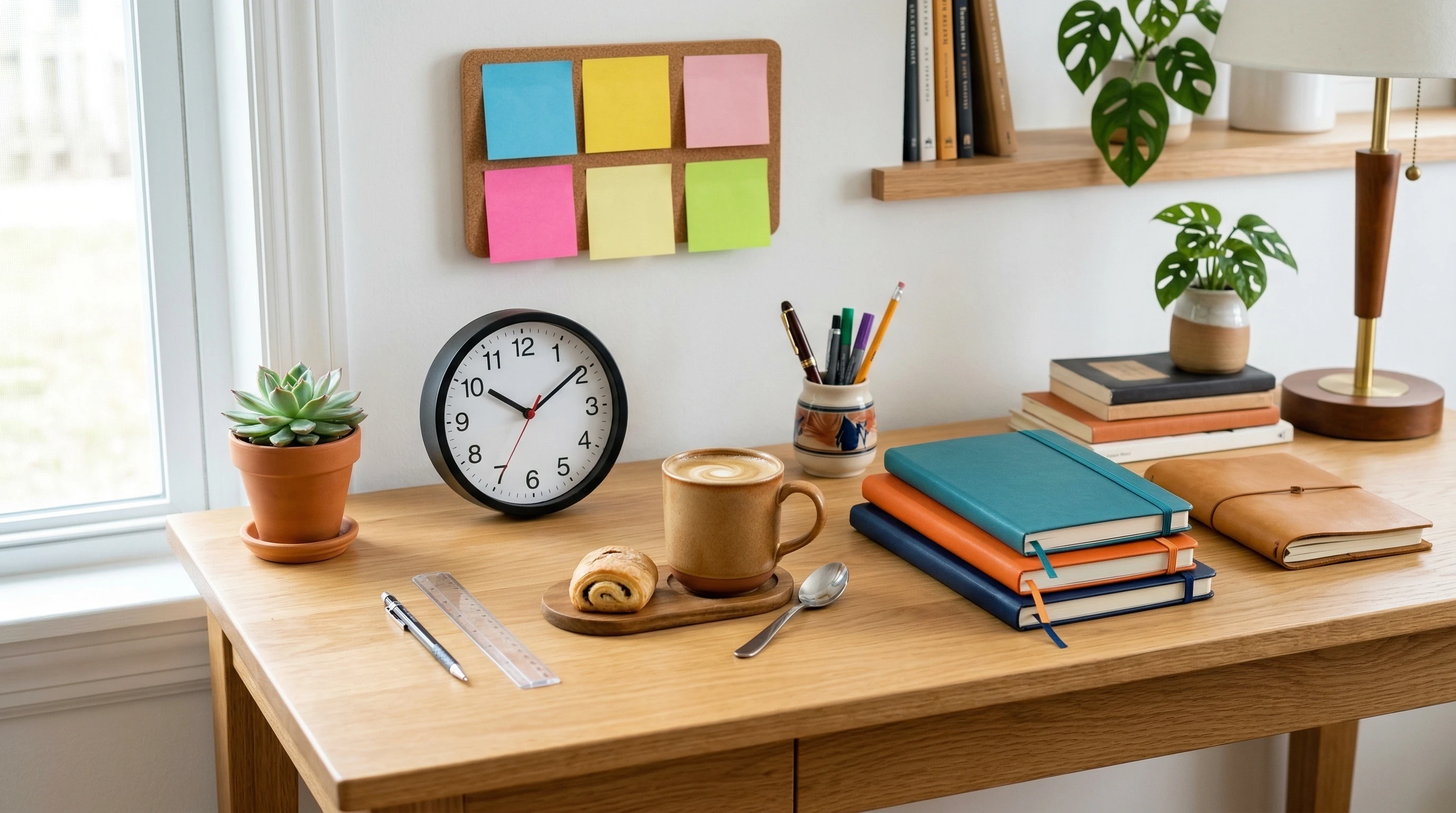
 Daily routines aren’t just schedules; they’re the little habits and choices that keep me focused and productive, even on tough days. By adding a few solid routines to my day, I get more done and feel less stressed. At the same time, I leave breathing room for life’s curveballs, so I don’t feel boxed in by a rigid schedule.
If you’re wrestling with motivation, (that’s me) feeling scattered, or want a system that helps you see progress (and actually enjoy it), a routine is pretty handy. I’ve put together some real-world tips and strategies that helps me stay efficient without losing my mind. Plus, they’re adaptable if your days don’t always look the same.
Getting Motivated to Work (Even When It’s Tough)
For me, motivation isn’t about waiting for a spark. Instead, it’s about building small habits that encourage consistency. There are a few tricks I use to push myself, even when I don’t want to get started.
How I Boost Motivation:
- Create a prework ritual: I pick a favorite playlist, make a coffee, or tidy my workspace for five minutes before starting work. This signal helps my brain know it’s go time.
- Set a super small goal to start: Breaking a task into tiny pieces, like writing one email or opening documents, lowers the pressure each morning.
- Count down from five and move: Sometimes a little countdown: 5, 4, 3, 2, 1. That makes me take action, even when I’m dragging my feet.
- Connect with a buddy: On low-energy days, checking in with a friend or accountability buddy helps. Even a quick text about our goals can motivate me to move. This really helps.
When Motivation Slips:
Some days, motivation is nowhere to be found. My workaround is to focus on effort, not outcomes. I pick one simple task, finish it, and let that sense of completion nudge me toward the next thing. Just showing up, even on sluggish days, builds momentum over time.
Following a Routine (Without Being Bored)
Routine doesn’t have to mean boring repetition. It’s as if I have a roadmap that keeps me from wandering off course. I build flexibility and rewards into my schedule, so it feels fresh, not restrictive. Mixing up where or how I do things keeps routines interesting and prevents burnout or the bug-eyed feeling.
Steps to Build a Routine You’ll Stick To:
- Start with just two or three anchor habits: Basics like planning the day, short exercise, and reviewing my top priorities are simple portable routines that work almost anywhere.
- Use visual trackers or checklists: Crossing off tasks or tracking habits on paper (or with an app) gives me a little boost each time. Using stickers, colors, or digital badges makes this even more eye-catching and fun. But simplicity is key.
- Change up the order or location: If things get stale, I switch the sequence of my routine or move to a different space. Small adjustments prevent things from feeling joyless.
- Add mini challenges: Setting a timer for ten minutes, doing a task in reverse order, or inviting a friend to join makes a regular routine more interactive.
Pushing Past Overwhelm in the Morning
Mornings can feel like trying to solve a puzzle before you’ve had enough coffee. When I wake up already feeling like I’m behind, I lean on a straightforward system to quiet the chaos. It’s easier than it sounds, and just a few changes help mornings become and feel less frantic.
How I Tackle Overwhelm First Thing:
- Skip the phone for at least 30 minutes: I know checking notifications first thing makes my mind race. It also tends to make me feel as if I been pulled into a tunnel. Even a short phone break helps me settle in.
- Focus on just one main task: I write down a single thing I want to finish by lunchtime. Once that’s clear, the mountain of tasks tends to shrink to a single focus.
- Use a brain dump notebook: I jot every random thought on paper, then organize it later. This clears my mental clutter enough to focus on priorities that matter. This is so helpful.
- Map out the morning: Even a rough timeline or list gives me enough structure to avoid decision fatigue as soon as I wake up.
Quick Reset Trick:
If anxiety hits, I get up, drink a glass of water, and go outside for two minutes. Fresh air and movement shift my headspace just enough to help me get started again. Sometimes, a small change of scenery—like opening a window or stretching for a minute—provides the break I need to regroup.
Measuring Job Accomplishments (Without Beating Yourself Up)
Some days I sail through my to-do list, and other days I fall behind. When I started measuring my accomplishments differently, I stopped feeling as if I let myself down all the time. Success can look different every day, and even tiny wins count.
Better Ways to Track Progress:
- Track effort goals, not just end results: I write down what I tried and learned, not just what I finished. Progress isn’t just about completed tasks.
- Keep a “done list”: By jotting down what I complete each day, I can actually see my progress, even on rough days. It’s proof that effort adds up.
- Set weekly themes, not just daily targets: If a day doesn’t go as planned, I have the rest of the week to get it done. This takes off some pressure and lets me roll with life’s surprises.
- Reflect weekly: Every Sunday, I spend a few minutes looking over my “done list.” Noticing patterns helps me spot strengths and pick a focus for improvement.
Staying Positive About Your Progress:
I remind myself that progress is about consistency, not about having a perfect streak. By focusing on what’s working and choosing one small thing to improve each week, I keep moving forward and avoid frustration. Embracing imperfection keeps me motivated, even when life throws curveballs.
Treating Yourself for Small Wins
 Celebrating mini milestones helps me stay motivated. It’s not about big rewards every time. Simple things make me feel good when I stick with my routine and motivates me to keep going long term.
Reward Ideas I Use:
- Take a longer break: After making progress, I take a break for a snack or a walk, guilt-free. Even five minutes of downtime feels satisfying after focused work.
- Add something fun to my day: I might squeeze in an episode of my favorite show, listen to a podcast, or plan a coffee or ice-cream run. Little treats boost my mood.
- Share wins with a friend: Sending a quick text or sharing a win in a group chat makes it feel more real. Peer support goes a long way, even with small victories.
- Make notes of compliments received: Keeping positive feedback or motivational messages in a notebook gives me a lift.
Why Small Milestones Matter:
The more I recognize my little accomplishments, the easier it is to stay on track. Over time, these treats turn effort into something I actually look forward to, helping my routine become second nature. Celebrating progress, no matter how small, makes routines feel rewarding instead of just another obligation.
Common Questions & Everyday Troubleshooting
How do I build a routine if my schedule is unpredictable?
I pick one or two habits that work no matter what, like a fiveminute tidy up or writing out priorities on a sticky note. This flexibility helps keep my routine steady when life gets busy.
I miss days and feel behind. What do I do?
- Give myself a free pass day, then restart the next. I don’t dwell on a missed day.
- Remind myself that small steps add up over time.
- Adapt and adjust: If one habit feels impossible, I switch it up, not scrap it completely. Flexibility over perfection helps me stick with it.
What if I just can’t get started?
I do the easiest thing on my list, like making my bed or writing a bullet point list, which helps me build momentum. Once I start, everything gets easier. Even if it’s just a tiny start, it creates a chain reaction toward larger tasks.
Putting It All Together: Routines That Stick
Daily routines aren’t about never messing up. They’re about setting up practical, repeatable habits that fit into real life. By stacking simple, flexible routines, tracking my effort, and celebrating even tiny wins, I get more done and feel more at ease with my day.
Quick-Start Routine Checklist:
- Pick one new habit to add to your day tomorrow.
- Keep a visual tracker, checklist, or “done list” nearby. Use stickers or colors to make it eye-catching and fun.
- Celebrate small wins—treats or positive shout-outs count!
Try one new routine this week and see how your days feel. If you have any daily tips or struggle with routines, drop a comment below.